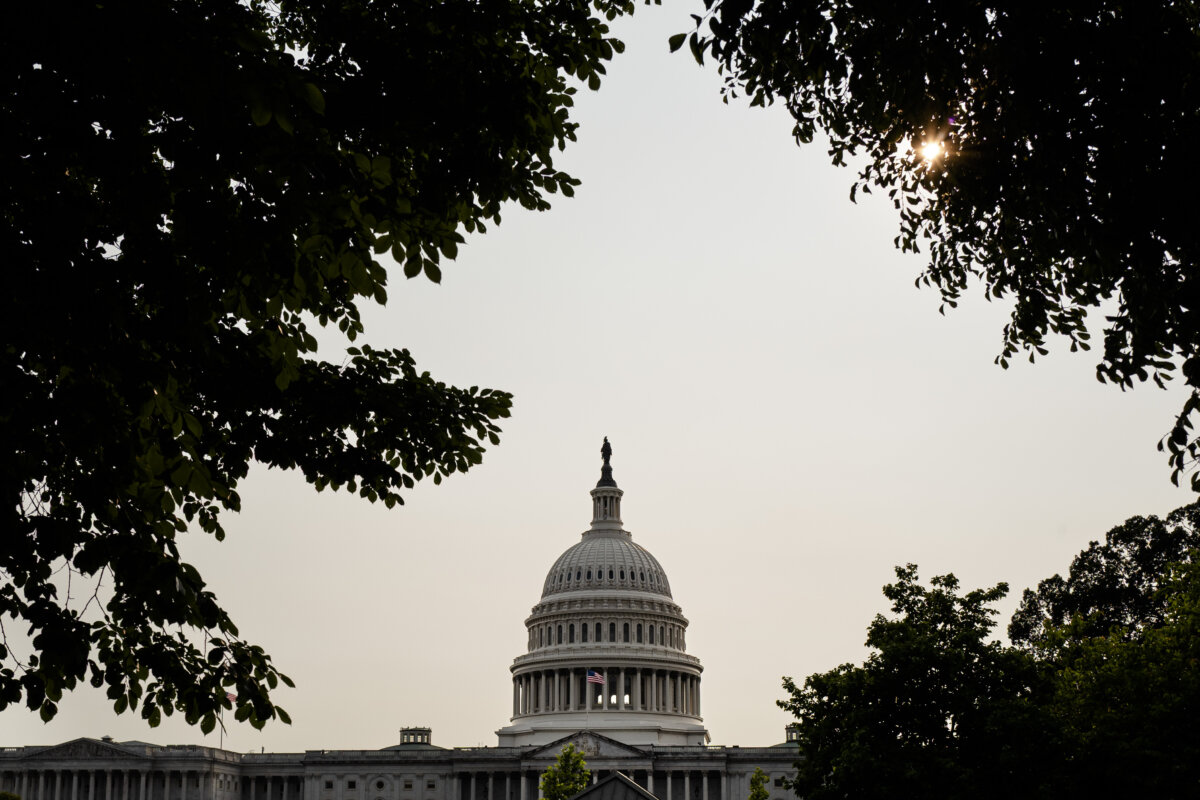
This Illustrates our Moral Decay

It is time for this to stop

CatholicVote is partnering with Secretary of Education Linda McMahon and others in an America 250 Civics coalition, an initiative aimed at restoring to our nation a right understanding of citizenship — its rights, its duties, and the moral foundation of self-governance. I can think of one man who could use a refresher course. Over the weekend, private text messages from 2022 surfaced showing Jay Jones, the Democratic nominee for Attorney General in Virginia, fantasizing about violence toward then–Speaker of the House Todd Gilbert, a political opponent. In one exchange, Jones speculated that Speaker Gilbert “gets two bullets to the head” and made appalling references to Gilbert’s family — even wishing that his children would die in their mother’s arms so that Gilbert would “move on policy.” As if that were not enough, reports have now confirmed that in 2020, Jones told Virginia House Delegate Carrie Coyner, during a discussion about police reform, that “if a few police officers died … then maybe they would move on, not shooting people, not killing people.” No Democratic leader in Virginia has yet called for Jones to withdraw from the race, though the Fraternal Order of Police of Virginia withdrew their endorsement. Apparently, no one in his party appears to think such words disqualify a man from holding the highest law enforcement office in the Commonwealth. But Aristotle would disagree — and every civics teacher in America should be up in arms. This race for Attorney General — and by extension, Virginia’s gubernatorial future — has become a moral referendum on what we tolerate in public life. The refusal to disqualify Jones is already a form of civic decay. The fact that mainstream media has decided to stand on the sidelines as though this issue is but one small scandal for which an apology suffices is appalling even if not surprising. When the lines between anger and evil blur, when rhetoric of death is dismissed as political theater, the foundation of the nation itself begins to erode. Imagine how the Gilbert family must have felt reading those words — their two young boys, both under ten, asking their father: “Daddy, why does Jay Jones want to kill us?” There is no answer to that question but madness and moral corruption. This corruption must be defeated in the ballot box.  If you have friends in Virginia, call them. Text them. Urge them to vote for Attorney General Jason Miyares — a man who has shown himself committed to justice, law, and the protection of every Virginian. If you live there, drive your five closest friends to the polls with you. There is nothing ordinary about a candidate for Attorney General who casually spoke of murdering opponents, police officers, and children. By extension, there is nothing ordinary about a candidate for governor – Abigail Spanberger – who won’t recognize this heinous behavior of her fellow Virginian as disqualifying in a climate that in the last month has seen a political assasination, armed violence against ICE officials, and a man arrested with a tent full more than 200 molotov cocktails outside the annual Red Mass for judges in Washington, DC. That is why our reaction must be nothing ordinary. This is Virginia’s moment to stand. To remind the nation that leadership is about service and requires virtue. Let us make this election a living civics lesson. Let us teach Jay Jones, and the rest of the nation, that hate has no place in our politics. Go forward bravely,
Kelsey ReinhardtPresident, CatholicVote

Trump’s Spending Bill.

Hat Tip to Epoch Times.

President Donald Trump’s public blowup with billionaire Elon Musk stems from a dispute over the fiscal impact of Trump’s mammoth tax-and-spending package, dubbed the “big, beautiful bill.” 
Musk and other critics have said the House-passed bill would worsen the federal government’s fiscal health. 
The White House has rebutted these claims, noting that the reconciliation package is not a budget bill or a blueprint for balancing the budget. 
Instead, it is a procedural tool designed to advance as much of the president’s agenda through Congress as possible, based on the Republican votes currently available, and it excludes projected revenue from tariffs and economic growth tied to tax cuts, according to Trump’s top budget official Russ Vought. 
Still, various organizations estimate that this legislation will exacerbate federal deficits and contribute to the national debt over the next decade. 
Here is a look at the different projections through the 2025–2034 budget window. 
Clashing Estimates: CBO versus White House
The Congressional Budget Office (CBO), a nonpartisan budget watchdog, released its scoring on the House-approved package. 
In its June 3 report, the CBO projected that outlays would decline by more than $1.25 trillion, but revenues would fall nearly $3.7 trillion. This will result in a $2.4 trillion increase in federal deficits over the next decade. 
White House Deputy Chief of Staff Stephen Miller, in a lengthy post on the social media platform X, disputed the CBO’s projection that the bill increases the deficit. 
“This lie is based on a CBO accounting gimmick,” he said. 
“Income tax rates from the 2017 tax cut are set to expire in September. They were always planned to be permanent. CBO says maintaining ‘current’ rates adds to the deficit, but by definition, leaving these income tax rates unchanged cannot add one penny to the deficit.” 
Vought also rebuked the CBO’s scoring methodology. 
“CBO continues to use a baseline that is fundamentally skewed toward the way the real world is,” Vought said in a press call. 
“The basics of that is that they assume that all spending will continue into eternity, your appropriations bills, all of your mandatory spending that gets a free ride into eternity, but somehow tax relief that has an expiration date isn’t assumed for the entirety of the fiscal window.” 
Epoch Times PhotoThe U.S. Capitol building in Washington on June 3, 2025. (Madalina Vasiliu/The Epoch Times)
Speaking to reporters at the White House during the president’s meeting with German Chancellor Friedrich Merz, Treasury Secretary Scott Bessent also alluded to the CBO’s recent tariff projections. 
This week, the CBO projected that tariff revenues will slash deficits by $2.8 trillion over 10 years, which Bessent said “puts the bill in surplus if you include the tariff revenue, which they won’t do.” 
What Do Other Forecasters Say?
Meanwhile, other independent organizations have presented similar debt and deficit projections for the bill. 
The Tax Foundation estimated on May 23 that the bill would result in a $2.6 trillion increase in the deficit. 
“Overall, the bill would prevent tax increases on 62 percent of taxpayers that would occur if the TCJA expired as scheduled,” Tax Foundation economists said. 
Last month, the University of Pennsylvania’s Penn Wharton Budget Model forecast that the reconciliation bill would raise deficits by $2.8 trillion. 
According to Yale’s Budget Lab, over a 30-year window, the bill would add $10.8 trillion to the national debt. 
“If the tax provisions become permanent, with no additional tariff revenue, the debt-to-GDP ratio would hit approximately 191 percent in 2055. The only countries that currently have a higher debt-to-GDP ratio are Japan and Sudan,” the Budget Lab said in its May 30 update
Bill Would Boost Economic Activity: White House 
Once the bill is enacted, the White House states that the administration’s actions, whether increased tariff revenues or substantial spending cuts, will reduce deficits by “at least $6.6 trillion over the next decade.” 
Supporters argue that the tax-and-spending plan, which includes tax cuts, would increase government revenues through more vigorous economic activity. This concept is related to the famous Laffer Curve, developed by the eminent economist Art Laffer. 
According to the Laffer Curve, popularized in the 1970s, there is an optimal tax rate that maximizes revenue, highlighting the relationship between tax rates and tax receipts. 
Following the passage of the 2017 Tax Cuts and Jobs Act, actual revenue from 2018 to 2024 totaled approximately $28.5 trillion. This has been $1.5 trillion higher than CBO’s projections—before adjusting for inflation. 
Interest Cost on New Debt
In a separate CBO report, released on June 5, officials predict that the One Big Beautiful Bill Act would trigger additional debt-servicing costs of $551 billion over the 10-year period. 
“That change would increase the cumulative effect on the deficit to $3 trillion,” the report stated. 
Experts from the Committee for a Responsible Federal Budget, an independent policy organization, estimate that interest costs on the new debt from the bill will amount to $1.8 trillion, accounting for 4.2 percent of GDP. 
If interest rates remain elevated—the benchmark 10-year Treasury yield hovers around 4.5 percent—interest payments could surge to $2.1 trillion in 2034, representing more than 5 percent of GDP. 
“All else being equal, higher debt and deficit levels will raise interest rates,” the Yale Budget Lab said. 
Fiscal health concerns have taken center stage in the U.S. Treasury market. 
While rates have stabilized, the 30-year Treasury yield recently topped 5.1 percent, the highest level since October 2023. 
This is a vital development since it influences consumer and business borrowing costs and how much it costs the federal government to service the debt. 
“Investors may demand higher compensation (more yield, lower bond prices) given the anticipated deficit spending trajectory and elevated bond issuance in coming years,” said U.S. Bank strategists in a May 22 note
Over the past few years, federal interest payments have increased significantly amid tighter Federal Reserve monetary policy and rising government spending. They are now the second-largest budgetary item, second only to Social Security. 
Annual federal interest payments are expected to exceed $1.2 trillion this fiscal year, according to the Treasury Department
Rocket Fuel or Lackluster Growth?
Many estimates suggest that the bill would provide a boost to the U.S. economy. 
Penn Wharton projects that its economic effects would increase GDP by 0.4 percent in 10 years and 0.7 percent in 30 years. The Tax Foundation expects long-run GDP to grow by 0.8 percent. 
The tax-writing House Ways and Means Committee is more bullish, predicting real economic growth of up to 5.2 percent over the next four years. 
On the labor front, according to the Tax Foundation, “hours worked converted to full-time equivalent jobs” would be 983,000. Additionally, pre-tax wages would grow by less than 0.05 percent. 
Average wages are projected to decline by 0.2 percent over the next 10 years but increase by 0.3 percent thereafter. 
The committee says up to 7.4 million full-time jobs will be saved or created, and workers could receive up to $11,600 in higher wages. 
Emel Akan contributed to this report. 
Frank FangFrank Fang 
To dig deeper into the subject, read the 

If you let people keep more of their own money, it will stimulate the economy and create growth in the private sector. If we do not reinstate the tax rates we have now, more money will go to the government, for them to waste. Tax and spend did not work before and it will not work now. A balanced budget might give us a chance to grow out of the 35 trillion dollar debt, eventually. We did not get here overnight and we won’t get out of this anytime soon, but that does not mean we should not try.

Epoch Times on Tariffs

WASHINGTON—As part of a bold shift in U.S. trade policy, President Donald Trump has ramped up tariffs on Chinese goods, aiming to revive domestic manufacturing and hold Beijing accountable for its decades of market-distorting practices. 
At the April 2 “Make America Wealthy Again” event in the White House Rose Garden, Trump unveiled the contours of his global tariff plans, including a 34 percent reciprocal levy on Beijing. The president pointed to China’s currency manipulation and other non-monetary trade barriers. 
This decision effectively raised the total new tariffs on China to 54 percent, including the 20 percent levies previously imposed to pressure Beijing into reducing the flow of fentanyl into the United States. 
This move will impact the approximately $600 billion in annual trade and bring tariffs on nearly all Chinese goods close to the 60 percent rate Trump had previously promised during his campaign. 
Trump believes that the United States holds leverage over other nations, including China, due to its status as the world’s largest and wealthiest consumer market. 
“Foreign nations will finally be asked to pay for the privilege of access to our market, the biggest market in the world,” Trump said during his Rose Garden speech. 
China quickly hit back, announcing that, starting April 10, it would impose 34 percent tariffs on imports of all U.S. goods. This move was part of a broader set of retaliatory actions, including tightening export controls on various rare earth elements and adding U.S. companies to the government’s “unreliable entities list.” 
Beijing also filed a complaint with the World Trade Organization (WTO), following through on a threat earlier this week. 
Trump pushed back at the Chinese regime after announcing its retaliatory response. 
“China played it wrong, they panicked—the one thing they cannot afford to do,” the president said in a post on social media platform Truth Social. 
Trade Distorting Practices
Despite joining the WTO in 2001, China did not evolve into the fully-fledged market economy that the United States had anticipated. 
China’s economic growth has accelerated dramatically since the country joined the WTO. However, the Chinese Communist Party’s trade-distorting practices, such as intellectual property theft, massive state subsidies, currency manipulation, wage suppression, and labor rights violations, have led to the closure of many U.S. manufacturers and the loss of millions of U.S. jobs. 
There is a bipartisan view in Washington on the need to address China’s market-distorting practices. 
Before the November election last year, President Joe Biden’s National Security Advisor, Jake Sullivan, defended tariffs against China. 
“Previous efforts to build a China policy on changing China have not succeeded,” Sullivan said on Oct. 24. 
As a result, he argued, the United States must adopt a new set of strategies based on the current geopolitical and economic realities. 
During his first term, Trump imposed tariffs on more than $300 billion worth of Chinese goods in response to various unfair trade practices, including intellectual property theft. 
The Biden administration chose to maintain those tariffs and even announced additional tariffs on products such as electric vehicles (EVs), solar panels, medical equipment, lithium-ion batteries, steel, and aluminum. 
Both administrations have used tariffs to level the playing field for domestic manufacturers and protect American workers. 
However, Trump’s latest move represents an even bolder step in attempting to contain China and hold it accountable for its longstanding trade-distorting practices. 
Nick Iacovella, executive vice president for the Coalition for a Prosperous America, an organization that represents domestic producers and workers, said that these tariffs will address the decades of deindustrialization in the United States. 
“It is incredibly important that those tariffs actually stay in place,” he told The Epoch Times. 
For decades, there has been a disconnect between Wall Street and Main Street, Iacovella added, commenting on the market reaction. 
“When automakers moved their jobs to Mexico, their stock prices went up, but car prices didn’t decrease for American consumers,” he said. 
Adam Savit, China policy director at America First Policy Institute, argues that China has less leverage, despite Beijing’s retaliatory actions. 
“The U.S. has much less exports to China than China exports to the United States. So inherently, they’re at a disadvantage,” he told The Epoch Times. 
​​He stated that charging 54 percent tariffs on Chinese goods is an appropriate response to an adversary, and it will help in the strategic decoupling from China. 
Bargaining Chip 
On April 4, Trump extended the deadline for TikTok to divest from its Beijing-based parent company by 75 days. 
The president made the announcement in a post on Truth Social, just ahead of the original April 5 deadline. 
Trump stated that he would continue working in “good faith” with China. Previously, he suggested that tariffs could be used as a bargaining chip to pressure China into approving the sale of TikTok’s U.S. operations from ByteDance, which several U.S. officials have warned has ties to the Chinese Communist Party. 
“You have a situation with TikTok where China will probably say: ‘We’ll approve a deal, but will you do something on the tariffs?’” Trump said on April 3. “We could use tariffs in order to get something in return.” 
Nathan Worcester, Jacob Burg, Terri Wu, and Andrew Moran contributed. 
Emel AkanEmel Akan 

Tucker On Tariffs

Well said.

Commentary 
Does the Left Support Worker Exploitation?
It’s no secret that the stock market has reacted poorly to the Trump administration’s “Liberation Day” tariffs. It makes sense why. Investors hate uncertainty, and America ushering in an entirely new economic vision, regardless of what that vision is, was always going to cause a shock. 

One of the conglomerates experiencing a nosedive is Nike. According to Schaeffer’s Investment Research, the company’s stock sank to a six-year low after the tariff announcement and now carries a 23.5% year-to-date deficit. 

The reason for this is straightforward. Nike uses cheap foreign labor to create its products, exploiting international markets to get away with paying its workforce a fraction of what American laborers would require. This is no secret. Nike reportedly employs 108,000 Chinese workers, paying them an average annual salary of $10,000. Its American employees, by contrast, tend to make nearly seven times that sum. 

This makes Washington’s new effort to incentivize companies to manufacture their products in the U.S. a bad situation for Nike. And they’re not the only ones. Reutersreported on Thursday that “Shares in Nike, Adidas, and Puma dropped sharply after Vietnam was targeted with a 46% tariff rate, Cambodia with 49%, Bangladesh with 37% and Indonesia with 32%, while Trump hiked tariffs on China by an extra 34 percentage points, following the earlier 20% tariffs.” 

Take a step back and ask yourself what this really means. A $10,000 salary is not a livable wage. It equates to less than $5 an hour, and that’s if the worker doesn’t take a single minute off all year. No vacations. No sick days. Nothing. Just a life of thanklessly slaving away in his employer’s overheated mines. 

Among other things, the White House’s pursuit of “fair trade” aims to end that inhumanity. The U.S. should not reward companies for treating human beings like soulless cogs, easily replaceable and whose hours are worth nothing more than five measly dollars.

Is that what American neoliberals want? Whether they realize it or not, Democrats complaining about the Trump tariffs are by definition advocating for the West’s continued exploitation of effective slave labor. They may attend pride parades and post social justice graphics on social media, but they quickly jump ship as soon as a policy that will drive real change threatens their precious wallets. 

Emphasizing this could be a good way for Republicans to regain the high ground in our country’s economic debate. Will the tariffs create jobs? They should. Do they put America first? Without a doubt. But they’re also moral. America is no longer interested in subsidizing the treatment of workers as worthless servants. Companies that refuse to oblige? Fine. Enjoy your big, beautiful tariff.

JD Vance Says the Right thing

Even when he is out of the spotlight.

Even in Private, JD Vance Puts America First
A key detail from Atlantic Magazine’s story on the Trump administration accidentally leaking its plans to bomb Yemen is being overlooked.

The content of JD Vance’s messages.

In case you haven’t seen the report, administration officials accidentally included Atlantic’s editor-in-chief in a Signal chat dedicated to discussing this month’s airstrikes in Yemen. This gave the journalist unprecedented access to the government’s process that led to the attacks, pulling back the curtain on what America’s most powerful figures are really like behind closed doors. 

The chat included well-known power players like Pete Hegseth, Mike Waltz, Marco Rubio, Stephen Miller, Tulsi Gabbard, and yes, Vice President Vance. It reveals why Vance was such an excellent choice to be a heartbeat away from the presidency. 

“Team, I am out for the day doing an economic event in Michigan. But I think we are making a mistake,” he messaged in response to the group’s gung-ho sentiments about launching the strikes. “3 percent of US trade runs through the [Suez Canal]. 40 percent of European trade does. There is a real risk that the public doesn’t understand this or why it’s necessary. The strongest reason to do this is, as POTUS said, to send a message.”

Vance also argued for delaying the attacks for a month and lamented the fact that, as usual, America was doing Europe’s dirty work for them. 

“I just hate bailing Europe out again,” he added a few minutes later.

Let’s take a step back. Yes, the Vice President’s hesitations may seem insignificant because the strikes wound up happening anyway. But they’re not.

Firstly, the dialogue shows that real, substantive policy debates are happening inside the administration. Its highest members are not afraid to spar with one another over issues that matter. The chat was not an echo chamber. Dissent is allowed.

Even more importantly, the messages reinforce the fact that the Vice President and likely future commander-in-chief is genuinely wired to want to avoid American interventionism rather than recklessly drop bombs all around the world to flex his manhood like so many of his predecessors. That doesn’t mean the Yemen strikes were examples of such recklessness. It shows that Vance’s antennas were up to make sure they weren’t and that his anti-war messaging isn’t just a public front.

Imagine what would have happened if previous Republican VPs currently held the post. Would Mike Pence have pushed back against the strikes? Please. Dick Cheney? He probably would have been furious they hadn’t happened already. But not Vance.

America could have avoided its disasters in Iraq and Afghanistan if the Vice President’s kind of thinking was present inside the Bush administration. The same goes for Korea and Vietnam. As the world plunges deeper into its nuclear era, it’s a relief to know Vance is where he is. He may wind up saving us all.

Here are Some Clues

Thank you Ralph. “Things you must know to be informed”

*YES, THE GOVERNOR OF MICHIGAN USED TO WORK FOR GEORGE SOROS.*

*YES, CALIF GOV. GAVIN NEWSOM IS NANCY PELOSI’S NEPHEW

* YES, ADAM SHIFF’S SISTER IS MARRIED TO ONE OF GEORGE SOROS’ SONS.

* YES, JOHN KERRY’S DAUGHTER IS MARRIED TO A MULLAH’S SON IN IRAN.

* YES, HILLARY’S DAUGHTER CHELSEA IS MARRIED TO GEORGE SOROS’ NEPHEW.

* YES, ABC NEWS EXECUTIVE PRODUCER IAN CAMERON IS MARRIED TO SUSAN RICE, OBAMA’S FORMER NATIONAL SECURITY ADVISER.

* YES, CBS PRESIDENT DAVID RHODES IS THE BROTHER OF BEN RHODES, OBAMA’S DEPUTY NATIONAL SECURITY ADVISER FOR STRATEGIC COMMUNICATIONS.

* YES, ABC NEWS CORRESPONDENT CLAIRE SHIPMAN IS MARRIED TO JAY CARNEY, FORMER OBAMA WHITE HOUSE PRESS SECRETARY.

* YES, ABC NEWS AND UNIVISION REPORTER MATTHEW JAFFE IS MARRIED TO KATIE HOGAN, OBAMA’S FORMER DEPUTY PRESS SECRETARY

* YES, ABC PRESIDENT BEN SHERWOOD IS THE BROTHER OF ELIZABETH SHERWOOD, OBAMA’S FORMER SPECIAL ADVISER.

* YES, CNN VP VIRGINIA MOSELEY IS MARRIED TO TOM NIDES, FORMER HILLARY CLINTON’S DEPUTY SECRETARY.

THIS IS WHAT YOU CALL A “STACKED DECK”. IF YOU HAD A HUNCH THE NEWS MEDIA WAS SOMEWHAT RIGGED AND YOU COULDN’T PUT YOUR FINGER ON IT, THIS MIGHT HELP YOU SOLVE THE PUZZLE.

Now you know why no one is investigated. They all have their hands in the cookie jar!  You might remember James Comey who investigated the Clinton email scandal and the Clinton Foundation, and made the final decision to not recommend prosecution by the DOJ.

It turns out that the Clinton Foundation was audited by the law firm DLA Piper. One of the executives there was in charge of the Clinton Foundation audit.

Who was it? Peter Comey, James Comey’s brother. Peter Comey held an executive position with the Washington law firm that did the audit of the Clinton foundation in 2015.   Peter Comey was officially DLA Piper “Senior Director of Real Estate Operations for the Americas,” in 2015 when the Clinton Foundation scandals first broke and Hillary was preparing her Presidential campaign.  Not only was DLA Piper, the firm where Comey’s brother worked involved in the audit of the Clinton Foundation, but according to the foundation’s donor records, DLA Piper has given between $50 – 100k to the Foundation

It gets even cozier. DLA Piper executive Douglas Emhoff is taking an extended leave of absence from the firm. Who is Douglas Emhoff?   He is the husband of KAMALA HARRIS! Just a coincidence?   Amazing if it is. You can’t make this stuff up!

 This “Family Tree” will make your head spin ..

Dominion (voting machine provider) serves 40% of the US market. It is in 30 states – – The state of Texas rejected the machines.


– Admiral Peter Neffenger is on Biden’s transition team.
 
– Neffenger was the President of the board of Smartmatic
 
– Smartmatic (another voting machine supplier) entered into an agreement with Dominion in 2009
 
– Smartmatic counted votes in Venezuela
 
– Smartmatic is connected to Philippine voter fraud
 
– Smartmatic is run by Lord Mark Malloch Brown who works for George Soros (-he and Brown are life-long friends)
 
– Brown chairs the Boards of a number of non-profit boards including the Open Society Foundation,
 
– Brown chairs the Centre for Global Development.
 
– Open society of course is owned by George Soros
 
– Smartmatic partnered with DLA Piper Global
 
– Douglas C. Emhoff works at DLA Piper Global
 
– Douglass C. Emhoff is Kamala Harris’s husband
 
 Guess who owns Dominion? – -Blum Capital Partners, L.P.
 
– Guess who is on the board for the company? — Richard Blum.
 
– Richard C. Blum is Dianne Feinstein’s husband.
 
– Nancy Pelosi’s husband is also a major investor
 
– An aide to Nancy Pelosi, Nadeam Elshami, was hired by Dominion Voting Systems
 
And it goes on…..
 
– Dominion Voting Systems is listed on the Clinton Foundation website.
 
– Dominion Voting is listed as a $25,000 -$50,000 donor to the Clinton Foundation in 2014 by The Washington Post
 
– Georgia Governor Kemp used Dominion Voting after Texas and Florida rejected them
 
– Dominion has a lobbyist named Jared Thomas
 
– Jared Thomas was Governor Brian Kemp’s chief of staff and press secretary from 2012 to 2015
 
– You must remember the Feinstein-Kavanaugh-Soros connections to understand this next information
 
– Debra Katz (Christine Ford’s lawyer) worked for George-Soros at the Open Society Foundation.
 
– Debra Katz (Christine Ford’s lawyer) also worked at Project on Government Oversight (POGO).
 
– POGO is funded by Soros’s Open Society Foundation.
 
– POGO is the co-signer of the letter Diane Feinstein presented against Kavanaugh’s nomination.
 

– Kamala Harris did not prosecute OneWest Bank for their fraud when she had the authority – Soros owned OneWest Bank.

Now you know why a woman who placed 7th in own her State when running for President is now VP (and soon to be president?)!