Leftists

Why Leftists Feel Entitled to Block Highways, Shut Down Speakers, and Harass Public Officials

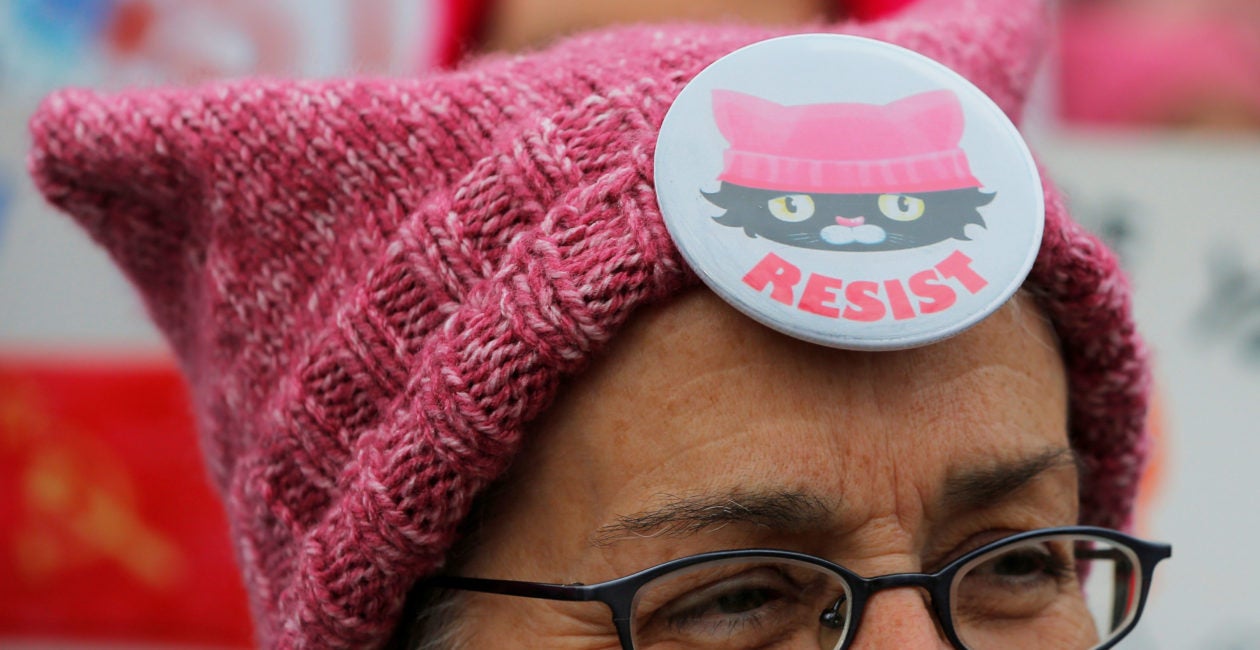
“[Leftsits] have thoroughly rejected middle-class, bourgeois, and Judeo-Christian religious values,” writes Dennis Prager. (Photo: Brian Snyder/Reuters /Newscom)

When I was in graduate school, I learned a lot about the left.

One lesson was that while most liberals and conservatives abide by society’s rules of order and decency, most leftists do not feel bound to live by these same rules.

I watched the way leftist Vietnam War protesters treated fellow students and professors. I watched left-wing students make “nonnegotiable demands” of college administrations. I saw the Black Panthers engage in violence—including torture and murder—and be financially rewarded by leftists.

Today, we watch leftist mobs scream profanities at professors and deans, and shut down conservative and pro-Israel speakers at colleges. We routinely witness left-wing protesters block highways and bridges, scream in front of the homes of conservative business and political leaders, and surround conservatives’ tables at restaurants while shouting and chanting at them.

Conservatives don’t do these things. They don’t close highways, yell obscenities at left-wing politicians, work to ban left-wing speakers at colleges, smash the windows of businesses, etc.

Why do leftists feel entitled do all these things? Because they have thoroughly rejected middle-class, bourgeois, and Judeo-Christian religious values.

Leftists are the only source of their values. Leftists not only believe they know what is right—conservatives, too, believe they are right—but they also believe they are morally superior to all others. Leftists are Ubermenschen—people on such a high moral plane that they do not consider themselves bound by the normal conventions of civics and decency. Leftists don’t need such guidelines; only the non-left—the “deplorables”—need them.

In August 2017, University of Pennsylvania law professor Amy Wax wrote a column for the Philadelphia Inquirer in defense of middle-class values. She and her co-author cited a list of behavioral norms that, as Wax put it, “was almost universally endorsed between the end of World War II and the mid-1960s.”

They were: “Get married before you have children and strive to stay married for their sake. Get the education you need for gainful employment, work hard, and avoid idleness. Go the extra mile for your employer or client. Be a patriot, ready to serve the country. Be neighborly, civic-minded, and charitable. Avoid coarse language in public. Be respectful of authority. Eschew substance abuse and crime.”

She later wrote in The Wall Street Journal, “The fact that the ‘bourgeois culture’ these norms embodied has broken down since the 1960s largely explains today’s social pathologies—and re-embracing that culture would go a long way toward addressing those pathologies.”

For her left-wing colleagues at Penn Law School, this list was beyond the pale. About half of her fellow professors of law—33 of them—condemned her in an open letter. And Wax wrote in the Journal, “My law school dean recently asked me to take a leave of absence next year and to cease teaching a mandatory first-year course.”

The Pennsylvania chapter of the left-wing National Lawyers Guild condemned her for espousing bourgeois values and questioned “whether it is appropriate for her to continue to teach a required first-year course.”

As regards traditional Jewish and Christian codes of conduct, just read the left’s contempt for Vice President Mike Pence’s religiosity. They fear him more than President Donald Trump solely for that reason.

One would think that leftists, as sensitive as they are to sexual harassment of women, would admire Pence’s career-long policy of never dining alone with a woman other than his wife. On the contrary, they mock him for it.

With such high self-esteem and no middle-class, bourgeois, or Judeo-Christian values to guide them, many leftists are particularly vicious people.

The opening skit of “Saturday Night Live” this past weekend—Matt Damon’s mockery of Judge Brett Kavanaugh—provided a timely example.

It is unimaginable that a prominent conservative group or individual would feature a skit mocking Kavanaugh’s accuser Dr. Christine Blasey Ford. Indeed, Kavanaugh noted his 10-year-old daughter’s prayer for his accuser, and a political cartoonist promptly drew a cartoon with her praying that God forgive her “angry, lying, alcoholic father for sexually assaulting Dr. Ford.”

Is there an equally prominent conservative public figure on the right who has ever said “F— Obama!” on national television just as Robert De Niro shouted, “F— Trump!” at the recent Tony Awards?

Now, why would De Niro feel he could shout an obscenity at the president of the United States with millions of young people watching him? Because he is not constrained by middle-class or Judeo-Christian moral values.

In Nietzsche’s famous words, De Niro, like other leftists, is “beyond good and evil,” as Americans understood those terms until the 1960s.

In 2016, at a Comedy Central roast of actor Rob Lowe, the butt of the jokes was Ann Coulter, not Lowe. They mostly mocked her looks, and if there is something crueler than publicly mocking a woman’s looks, it’s hard to identify. For example, “Saturday Night Live” cast member Pete Davidson said, “Ann Coulter, if you’re here, who’s scaring the crows away from our crops?”

There surely are mean conservatives—witness some of the vile comments by anonymous conservative commenters on the internet. And it is a moral scandal that Ford has received death threats.

The difference in left-wing meanness is the meanness of known—not anonymous—people on the left. They don’t hide behind anonymity because they do not feel bound by traditional notions of civility, for which they have contempt.

Now you can understand why the left hates Pence, a man who has, by all accounts, led a thoroughly honorable life. He—and other evangelical Christians and Orthodox Jews—tries to live by a code that is higher than him.

That ethic is what Ubermenschen seek to destroy. They are succeeding.

Trending


Wolf Street on the Fed

Powell Explains Just How Hawkish the Fed is Getting

“But we’re a long way from neutral at this point.”

When asked how much he worried about another “financial crash,” Fed Chairman Jerome Powell told PBS News Hour that the “next set of problems” wouldn’t “look a lot like the last set of problems we had.” It would be “something else, a cyber-attack, some type of global event.” And then he threw in the zinger: “Or maybe it will surprise us and look exactly like the last one.”

It’s those zingers that deviate from the official script that make his Q&A sessions so revealing – I assume, purposefully so. And he pointed out just how hawkish the Fed is getting in its “very gradual” manner.

The interview was wide-ranging and triggered laughter in the audience on several occasions, a feat for Fed Chairs, but I’ll focus on what he said concerning risks and interest rates.

It got started with a question about the risks of raising rates too quickly or too slowly. In the latter case, the risk, he said, is that “the economy overheats, and that can show up in form of too high inflation or financial market imbalances.”
The mantra of “financial market imbalances” started showing up in Janet Yellen’s answers when she was still Chair. It’s the concept that inflated asset prices pose a risk to the financial system when those assets are used as collateral. After spending years trying to inflate those asset prices via its radical monetary policy, the Fed has been trying to tamp down on them. And it’s up there on the worry list: Powell mentioned this risk on an equal basis with “too high inflation.”

So investors shouldn’t expect the Fed to step in when asset prices sink: Bringing asset prices down some is part of the plan. It starts with bonds – raising rates has that effect on them. And it eventually goes from there.

How far will the rate-hike cycle go?

“The really extraordinarily accommodative low interest rates that we needed when the economy was quite weak, we don’t need those anymore,” he said. “They’re not appropriate anymore. We need interest rates to be very gradually moving back toward normal.”

“And that’s what we’ve been doing now for basically three years, and interest rates have just now in real terms [adjusted for inflation] moved above zero,” he said.

“Interest rates are still accommodative, but we’re gradually moving to a place where they will be neutral – not that they’ll be restraining the economy.”

“We may go past neutral,” he added, then threw in another zinger: “But we’re a long way from neutral at this point, probably.”

Currently, the Fed’s target for the federal funds rate is a range between 2% and 2.25%. To Powell, this is “a long way from neutral.” No one knows where exactly “neutral” is, and there isn’t even any agreement if the concept matters. But we’re “a long way from it,” and then the Fed may raise rates “past neutral.” This math takes short-term rates well past 3% and perhaps closer to 4%.

When asked which of the risks worry him more, “going too slowly or going too fast,” he said:

“Almost by definition, I see them as balanced…. We have to take both of those risks very seriously and try to navigate in between them.”

“We’re always going to be looking carefully at incoming data to adjust our policy. If we see things getting stronger and stronger, or inflation moving up, then we might move a little quicker. And if we see the economy weakening or inflation moving down we might move a little more slowly.”

So if the economy weakens, the Fed would still increase rates, only a “little more slowly,” and there was not a word about actually cutting rates if the economy slows. In other words, rate cuts are off the table. What’s on the table is the speed of rate increases.

Which expands on his zinger-rich comments during the press conferenceafter the FOMC meeting.

And when asked what keeps him up at night, he quipped, “basically everything.” Into the laughter, he added, “Nobody wants a central banker who sleeps well, right? What good is that?” Which led to the next and very serious question: Does he worry about another “financial crash?”

“My guess is the next set of problems we have won’t look a lot like the last set of problems we had,” he said. That the Financial Crisis won’t repeat itself for numerous well-established reasons has by now become another mantra, including chez yours truly.

“We don’t detect measures of financial instability as being elevated at this time,” he said. “They’re sort of in the moderate range, in our view, in the view of our staff, and certainly in my view. So it’ll be something else, a cyber-attack, or some type of global event. Those are the kinds of things,” he said.

And then, on second thought, he added: “Or maybe it will surprise us and look exactly like the last one.”

So, OK.

During the last FOMC press conference, Powell had warned that the US is “on an unsustainable fiscal path, there’s no hiding from it.” A few days later, the fiscal year ended, and despite the boom times, this happened… US Gross National Debt Jumps by $1.27 Trillion in Fiscal 2018, Hits $21.5 Trillion
Would you like to be notified via email when WOLF STREET publishes a new article? Sign up here.


New NAFTA

ORIGINALLY PUBLISHED IN

bat

By Tim Nerozzi

President Trump crowed that he had delivered on a campaign promise that will deliver “cash and jobs” to U.S. workers by successfully renegotiating the North American Free Trade Agreement.

The Tweets:

Trump Also Tweeted:

What it Means:

The United States-Mexico-Canada Agreement, nicknamed “NAFTA 2.0,”  is the first overhaul of North American trade policies in 25 years.

“The President is keeping his promise to renegotiate NAFTA, and this achievement is a mutually beneficial win for North American workers, farmers, ranchers, and businesses,” said the Office of the United States Trade Representative on the its official website. “When finalized and implemented, the agreement will create more balanced, reciprocal trade that supports high-paying jobs for Americans and grows the North American economy.”

After over a year of negotiations, the White House said the new deal will be especially helpful to American dairy farmers, who had faced import limits from Canada, and automobile workers. Moving forward, automobiles will only qualify for tariff exemption if 75 percent of its components are made within the country. The new pact also stipulates that at least 30 percent of work on automobiles must be conducted by workers making at least $16 an hour starting in 2020, increasing to 40 percent in 2023. This should make higher-paid American workers more competitive but it may also increase the cost of vehicles.

Per the agreement, Mexico has decided to give workers the right to unionize – which should drive up wages and prices – and take steps to eliminate gender discrimination in the workplace.

In addition, the pact has more safeguards for intellectual property rights and extends copyright protection to 70 years past the death of the author.

Why It Matters:

The Trade Representative Office has said that the new agreement is necessary for “creating a more level playing field for American workers,” “benefiting American farmers, ranchers, and agribusinesses,” and “supporting a 21st Century economy.”

The only things standing in the way of the new USMCA are a vote from the United States Congress and the signatures of President Trump, Canadian Prime Minister Trudeau, and Mexican President-Elect Obrador.

If the trade agreement is not passed before the midterm elections later this year, Trump may be in trouble. If the midterms swing in favor of Democrats, they may be liable to kill the bill to avoid letting Trump score points with the American public.

What People Are Saying:

On Twitter, Trudeau was slightly less flamboyant. From his official account, he posted a photo of his meeting with the Quebec team at the Canadian national caucus, saying that the new USMCA would create “jobs and opportunities” for “Quebecers and all Canadians.”

President-Elect Lopez of Mexico also known by the nickname “AMLO” was silent online, not yet mentioning the trade deal on his official social media.

…

The Problems With a Minimum Wage Mandate

Let us use the $15 wage paid by Amazon as our median. $15 an hour in Lawrence , Kansas would be a fair wage for low skilled work in most cases. When to apply that same criteria in San Diego, California, it become a problem. $15 an hour does not buy as many goods and services in San Diego. The regional cost of living is a huge factor.

Now we break it down into another set of criteria. Some businesses operate on razor thin profit margins. Many of these industries employ low skilled workers. When you are required to pay a minimum wage to low skilled workers, the results can be bad for business. The results can be fewer workers hired, while existing workers are given more work. Raise prices for goods and services, which may cause a loss of customers. Cut backs on the quality of goods and services, which is never good for the bottom line. We must also consider that the real cost of hiring any employee contains government taxes paid by the employer, benefits, uniforms, etc. These costs add about 30% to the cost of hiring someone above their paid wage.

So many things to consider whe the government tries to get involved. Usually the “unintended consequences” of government rules and regulations are much worse than the problem they were trying to resolve.

Always look behind the scenes when you hear any politician proposing a government solution to a problem. Follow the money.