Have we forgotten why we need to be debating transgender legislation?
In recent years, the establishment has shown an increasing willingness to capitulate to the transgender lobby. I’m all for supporting much-abused minorities, but the loudest voices in the current debate around transgender rights is a cabal of bullying censors demanding nothing less than blind loyalty and total obedience. Under its vociferous pressure, local and central government, universities, the NHS, and even the police, are hell-bent on silencing anyone who might dare offend the trans-Taliban.
Even West Yorkshire police appear to be under their cosh. Last week, a verbal harassment warning was issued to Graham Linehan, the co-creator of the sitcom Father Ted, for pointing out that the transwoman Stephanie Hayden was biologically male, and tweeting her two previous male names – a practice known in the transgender universe as “deadnaming”. Even though, in the course of their spat, Hayden had posted details of Linehan’s wife’s company on Twitter, she still considered herself to be the aggrieved party.
At the heart of their dispute is the Government’s proposed amendments to the Gender Recognition Act which, if passed, would allow men to self-identify as women. Those who have raised questions about the issues, as Linehan did, or expressed moderate concern about for example, access to same-sex spaces, have found themselves vilified. Best not mention Karen White, the transgender inmate of an all-female prison who admitted to sexually assaulting other women within days of being incarcerated.
Suggested reading
Gender preference has no place on a birth certificate
By Meghan Murphy
Hayden, who is pursuing civil proceedings against Linehan, having accused him of harassment, defamation and misuse of private information, said that she had spent five hours giving a statement to police. That’s five hours of police time, plus the paperwork involved, and for what? For describing a person with XY chromosomes as “he”.
It’s not just the police who have joined the woke Stasi. The Scottish Government launched the poster campaign One Scotland, warning that “hate crimes” will not be tolerated and that anyone “perpetrating hate” towards disabled, lesbian, gay, and transgender people will be reported. Of course hate crime should be prosecuted, but in today’s climate, this could mean being prosecuted for calling a transgender, though biological male,”he”. It’s the same in our universities. Even neutral investigation of the issues, disinterested academic speech, and differing views are being silenced and howled down.
Suggested reading
When did women’s rights stop being human rights?
By Jo Bartosch
Perhaps, given the prevailing McCarthyite climate on our campuses, we shouldn’t be quite so shocked by the case of James Caspian. He is a gender identity clinician, and the trustee of a charity that works to help transgender and transsexual people. He had heard from other gender specialists about the growing numbers of female-to-male transsexuals who wished to revert to being female, despite having undergone life-changing surgery. Caspian decided to write his thesis on de-transitioning, and submitted a proposal on the subject to Bath Spa University as part of his Masters degree.
The proposal was rejected by the university’s ethics committee because it could be deemed ‘politically incorrect’, and that such research might “offend” trans people by highlighting the fact that some people regret undergoing sex-change surgery.
Here then is another eulogy for that once prized ideal that universities exist to encourage discussion, research, and to challenge out-of-date ideas. When Caspian complained, he was told the university’s decision was justified because his research could provoke “unnecessary offence” and “attacks on social media”.
Who let the thought police invade our universities?
By Julie Bindel
Similarly supine responses to the bullying have extended to the workplace. Ken Zucker headed the Toronto-based child, youth and family gender identity clinic at the Centre for Addiction and Mental Health (CAMH) for more than 30 years. He was sacked in 2015 following claims that he had “practiced conversion therapy” on children that identified as transgender, because he advised parents to “watch and wait” before opting for hormone blockers or other invasive treatment. CAMH launched an external review as a result of complaints, and on the day it was published – without consulting Zucker – fired him. Earlier this month, Zucker received a public apology and a substantial pay-out from CAMH.
The shutting down of the debate is ramping up, as the need for discussion becomes more urgent. Earlier this month, an event organised by Women’s Place UK to discuss proposed changes to the Gender Recognition Act was cancelled by Leeds City Council with less than three hours’ notice after complaints from trans activists. Merseyside mayor, Joe Anderson, last month used his packed council chamber to make an impassioned speech denouncing ReSisters, a feminist group which opposes mixed-sex toilets in public buildings.
Further reading
Liberals, social conservatives and feminists likely to oppose Justine Greening’s Gender Recognition Act
By Peter Franklin
Have we forgotten why we need to debate these policies? Shouldn’t we be examining all aspects of the impact the legislation would have on half of the population if it were passed? The changes proposed are far from uncontroversial, and will have real material effects. Discussion of them (as with any proposed change to the law) is what the legislative process is all about.
Making immediate concessions to the bullying eliminates the chance of any rigorous investigation into the evidence taking place. It also grants one group legislative superiority over the rights of any others. It is governance based on who shouts the loudest. Apart from putting lives at risk, it also sets a terrible precedent for other bullies and ideologically driven pressure groups. Police, governments, places of work and learning need to be able to stand up for rights, not illogical and dangerous rhetoric. Otherwise democracy loses. And that should concern more than half of the population.
Further reading
Don’t be so quick to laugh at the ‘grievance study’ hoax
“He gave us each a copy of a hand-drawn map of the mound and the village as he imagined it looked in the 5th century.” All Illustrations: Aïda Amer (Figure: Suman Acharya/Alamy; landscape: yeowatzup/CC BY 2.0)
Visiting someplace new is an inherent thrill, but very often, the strongest memories we take away from our travels are the people we meet along the way. A chance encounter while far from home can result in an unforgettable night, or even an unexpected friendship.
Recently we asked Atlas Obscura readers to tell us about the most memorable people they’d ever met while traveling. In response, we received an incredible number of tales, each one making a convincing case for talking to strangers. You told us about everything from touching encounters at museums to aimless nights with dentists and dogs alike. Throughout these recollections, you made it clear how a sense of openness and adventure have helped turn your travels into something much more human, and frankly, more exciting.
Below, we’ve collected a selection of our favorite reader responses. Sit back and enjoy these amazing tales from strangers about meeting strangers—perhaps you’ll make a surprising connection of your own.
A Sculpture Comes to Life
“My husband and I were on a bicycle tour across the Kibi Plain near Okayama, Japan, which is studded with prehistoric tombs and other historical features. We stopped at Tsukuriyama Kofun, which is an enormous 5th-century keyhole tomb mound (the fourth biggest in Japan). Before the climb, we noticed a striking modern sculpture called the King of Kibi, an imagining of the ruler buried in the mound. As we were wandering around on top, we ran into an older Japanese couple and started chatting with them—only to discover that the gentleman was the sculptor! He was happy to run into two Americans interested in ancient Japanese history and showed us all over the mound, including the tomb chamber itself. Then when we descended, he invited us around the corner to his workshop, where he gave us each a copy of a hand-drawn map of the mound and the village as he imagined it looked in the 5th century.” — Ellen, Centreville, Virginia
Witness to History
“Striking up a conversation in Tibetan with an older Tibetan man sitting near me, he noticed that I was obviously a foreigner and asked me where I was from. When I told him I was an American, he immediately launched into a story from his childhood in a remote village outside Lhasa, where an American airplane crashed and his family took in the U.S. pilots who were stranded there. Teahouses in Lhasa are places where folks sit all day and drink tea and noodle soup and tell (sometimes tall) tales. Since his story seemed so far-fetched, I listened with interest but discounted it as a completely made-up tale meant to entertain, make a connection with, or even tease me as a foreigner. Years later, after returning home from years living in Asia, I came across the book, Lost in Tibet: The Untold Story of Five American Airmen, A Doomed Plane, and the Will to Survive, and as I read, the memory of this gentleman and all the matching details returned to my mind, and I realized he had been telling the absolute truth! The time period, his age, the village, the descriptions all matched. I was amazed that I had met this person who had experienced this historical event in a remote location on the roof of the world first hand.” — Erin O’Neill,Minneapolis, Minnesota
Who Says There’s No Crying at a Viking Museum?
“In June 2016, my husband and I visited the Viking Ship Museum in Roskilde, Denmark. It is the national museum for ships, seafaring, and boatbuilding in the prehistoric and medieval periods. The museum is spread across several buildings, harbors, and fields. My husband and I were fortunate to be able to row a Viking boat from a small harbor into a fjord, where the wind was really whipping. It was an awesome experience! However, I was most touched that day when I met Bjorn. He was demonstrating how to make sailing rope from lime tree raffia. I asked Bjorn if he had been making rope for a long time and why he started doing it. Before he answered, he looked at the ground, thought for several minutes and then told me the most lovely story about how he never really learned to make rope but occasionally helped a friend—who often crafted large sailing rope—bind his completed projects. Bjorn said he and his friend met more than 30 years ago and had a connection. They traveled together. Raised their families together. They shared a long, happy friendship, he said. Sadly, Bjorn’s friend was diagnosed with leukemia and died. Although Bjorn never truly learned how to make rope, he was asked by the Viking Ship Museum if he would give it a try and take over demonstrations for his friend. ‘I never knew how to do this but when I sat down here, my hands just knew what to do,’ he said. It’s not cool to cry at a Viking museum, but I almost did that day.” — Kelley King, Superior, Colorado
“She made me realize how short life is and why not spend it doing what you love?”
A Sense of Adventure Is Contagious
“Her name is Keira and she is from Australia. We were both traveling alone and a couch-surfer agreed to pick me up from the airport in Menorca. She happened to be in the car. We decided to meet up every day to explore together. We were about the same age (28) at the time and she was already retired. I was in awe! She had worked very hard as a young adult and was able to save up enough to own some properties in Melbourne. She used the money that her renters paid to travel the world. She told me a story about riding a moped through Asia and how after an accident, some locals stuffed tobacco leaves into her wound. Once she finally got to a doctor, they were upset that she had allowed anyone to do that to her. She had a gnarly scar from the experience, but embraced it from beginning to end. She was the kind of person who could talk to anyone and was so easy to get along with. She made me realize how short life is, and why not spend it doing what you love?” — Allie, Lexington, Kentucky
The Monk Who Clocked In
“I was at a large Buddhist temple and began chatting with one of the monks. He introduced himself as Mister Hiska. The conversation turned to religion and he told me Buddhism was his job, not his religion. He said his mother had brought him to the temple when he was 2 years old. He was in his 60s at the time and told me his high status at the temple allowed him to choose to live in his own apartment in the city. Every day he puts on his suit and tie, takes the train to work, changes into his robes and performs his duties. At the end of the day he changes back into his suit and returns home. That was the first time I considered that someone entering the temple so young may choose to remain employed there while their heart seeks something else.” — Annie Lou von Mizener, Indiana
A Dentist, a Garbageman, and a Dog Walk Into a Bar
“While hitchhiking in Sligo, Ireland, my companion and I were picked up by a dentist and a garbageman heading off to their favorite pub near Yeats’s ‘furthest Rosses.’ They sang loudly as we traveled. We arrived at the pub, drank for a while and mentioned that we needed a place to stay overnight. We couldn’t afford to stay at the pub. They suggested the nearby golf course, but we nixed that. Then, after demanding that we sing ‘Yankee Doodle,’ they sent us to camp on the beach guarded by their dog, Watchman. He stayed with us until the morning and trotted off home. I am still looking for a dog to name ‘Watchman.’” — Linda, Sequim, Washington
The Secret House
“Many years ago I was on a small cruise ship in Costa Rica, and somehow conned the crew into giving me a kayak to explore a deserted cove that we’d anchored in. I was 13, I think. I took it a short distance to a beach, and walked around a bit. I suddenly heard a voice say, ‘Hi, I’m Jeff, from Indiana!’ I turned around and sure enough, there was a kid my own age standing there. I have no idea how he got there without me seeing him. Anyways, he says, ‘follow me,’ and bounds off through this thick jungle foliage. We quickly came to this absolutely wild looking house; to this day I’ve never seen anything like it. It had no walls, only a frame, but was three stories tall and surrounded by terraced gardens. It looked like the tropical paradise of one’s dreams, like it was as pretty as the Alhambra. His story was simply that his parents were from Indiana, as if that explained the house in the jungle. We talked about American girls. I recently tried to find the spot, but came up empty. My mom kept a brochure from the cruise company and I tried to identify likely spots, thinking that it might be some sort of nature resort, but came up empty. When I got back to the ship I remember not telling anyone. It felt good.” — Reggie, Vancouver, Canada
“We shared a couple of Cokes and chatted about the world.”
A Small World, Indeed
“While backpacking with my brother in Morocco in 1994, I met a young man named Mohammed in a cafe. We were in a town called Zagora at the north edge of the Sahara Desert. Mohammed’s business was leading trade caravans on camels across the vast desert between Zagora and Timbuktu in Mali, a journey that took 52 days to complete. He was very quiet and shy. Zagora was the big city to him, and too noisy for his tastes, even though it was only a mid-sized town. We shared a couple of Cokes and chatted about the world. A couple of years later I was in a doctor’s office and reading a National Geographic article on Morocco—and there he was again.” — David van Belle, Edmonton, Alberta
An Ordinary Kindness
“When our three children were young, a friend offered us their holiday cottage for a week as we couldn’t afford a holiday that year. We did a lot of cycling along quiet country lanes and villages. One very hot day we arrived at a tiny village square and discovered that the village store had closed. Hot and bothered, we shared our last bottle of water between us. A very elderly man emerged from a small cottage nearby carrying a bag. To our surprise he offered us refreshments: small bottles of lemonade, crisps, chocolate bars, and even sweets. We explained that we had nothing other than small change on us to repay him but he said he’d be offended if we didn’t take it. He sat chatting with us for a while and reminisced about having young children and family life. It was a humbling encounter and one that reminded us of the nobility and kindness of ordinary people.” — Maureen Dew, Near Birmingham, United Kingdom
‘Nuff Said
“The Naked Guy.” —Mindy Cole,Albuquerque, New Mexico
When the Spirit of Adventure Offers You Vodka, You Take It
“Our bus driver was speeding down through the mountains from Quetzaltenango to Guatemala City with the enthusiasm of an F1 racer, all in the heaviest rainstorm I’ve ever seen. I was starting to feel genuine fear, and glanced across the aisle at the only other person who didn’t look like a local. I made a feeble joke about us going over the side of the mountain, and the young woman calmly legitimized my fear. ‘Yeah, I stayed in the spare room of a woman who was taking boarders after her husband accidentally went over the side of a mountain with his bus full of people.’ Um, thanks for that. She offered me a sip out of her vodka bottle to calm my nerves. She introduced herself as Sullivan Oakley. Have you heard a cooler name? (Hint: no you have not.) An American in Guatemala teaching English, she was traveling on her own to her next teaching gig in San Salvador. We made it out of the mountains alive, only to pass block after block of seedy characters as we neared the bus station in Guatemala City. We joined forces for the next segments of our journeys. Sullivan’s ability to negotiate a cab ride in Spanish along with my additional presence made us both safer as we went to our locations for the night. I’ll never see her again, but I often think of her as the spirit of adventure itself.” — Amy Cecil, Kansas City, Missouri
“He found us walking sticks, guided us over landslides with unfailing good cheer, constantly smiled because he was having his own adventure while guiding us.” Fabio formaggio/Alamy (figure); Reggaeman/CC BY-SA 3.0 (landscape)
Language Is No Barrier
“When my daughter and I were attempting the Annapurna Circuit trek, we soon discovered that we were carrying more weight than we could handle. We had planned this trip for months, but were physically challenged to return to the town from which we had started our trip. We tried removing and donating extra nuts/protein bars and the like, but still had too much weight. Another trekker suggested that we hire a local man from the village to be our porter, which would mean carrying all our extra weight. We thought that to be impossible since all the village men were quite small and had never walked the Circuit, which summited nearly 18,000 feet. Tagu, a local villager (and very small man), decided to take the job. We carried as much as we could in our day packs. Tagu carried the remaining weight in one backpack and, ten days later, safely delivered us to our last destination. Tagu always waited at strategic forks in the path to make sure we were on target (he was always ahead). He found us walking sticks, guided us over landslides with unfailing good cheer, constantly smiled because he was having his own adventure while guiding us. He did not speak English. We did not speak Nepali. Tagu helped us achieve a monumental adventure.” — Karen Custer Thurston, Flagstaff, Arizona
First Kiss
“In 2015 I took a trip with my local chamber of commerce to do a bus tour of Ireland. It was my second time to the country, but oddly enough, my first real ‘tourist’ trip. After a long drive from Dublin and some stops along the way, we arrived in Killarney for the evening. We settled into our hotel and had a fabulous dinner. I joined a few of our group for drinks at the bar after and we wandered outside. It was quite a scene; there was a wedding party going on inside. There were a few folks from the party taking a break outside as well and I fell in with talking to a guy who turned out to be the brother of the bride. He was a fisherman who had grown up on a farm in the area. We talked for hours, he bought me a drink, flirted hard, and ended up being my first kiss. Three years later, we still keep in touch.” — Mallory, Maryland
Stranger Than Fiction
“I was traveling through Pakistan using couch-surfing to find places to stay. I messaged one guy who had the most outrageous profile I’ve ever seen in my life: he said he had been given a private performance by Rahat Fateh Ali Khan; published two medical papers; written three books; and modeled for Calvin Klein at the ripe old age of 23. I assumed this was him having a laugh but when we met up I discovered that he was legitimate. He was the grandson of a famous Pakistani poet and possibly the smartest person I have ever met in my life. He knew more about Scottish politics than I did! He brewed his own Ayahuasca, made millions on Bitcoin and had three professionally made music videos. Unfortunately, he experimented a bit too much with substances and died of a suspected overdose this year. I don’t think I’ll ever meet another character like him. RIP, mate.” — Jack Campbell, Scotland
A lot of people that I know think of themselves as natural pessimists. Suggest going to see a play, and they will tell you about how crowded it will be. Suggest a new idea at work, and they will tell you that everyone will oppose it and why it won’t work. Tell them a dream of yours, and they will let you know the myriad ways it will fail to materialize.
If you’re one of those pessimists, you might think that you are broken in some way. Your first reaction might be to find out how you can look on the bright side of things rather than always seeing the potential flaws.
But, actually, your pessimism is quite powerful. You just aren’t using it right.
Research on goal achievement suggests that specific plans are crucial for succeeding at anything you try. Those specific plans should include lots of particular steps that you need to take in order to succeed. But, they also need to incorporate an understanding of all of the barriers that will prevent you from reaching your goals.
That is where your inner pessimist comes in. Next time you are contemplating an important goal (of your own or someone else’s), release that pessimist and let it run wild. Find all of the things that will go wrong. After all, if you really do try to achieve this goal, the obstacles really are likely to be out there.
The trick, though, is not to use them as a reason not to pursue the goal. Instead, after you have given your pessimistic side its chance, bottle it up and start problem-solving. Treat those obstacles as things you can plan for.
Triage the potential obstacles
Start with some triage. Which of the obstacles that you identified are really unlikely to happen? Which of them are not really that important? Put an X next to those items on the list. You have noted potential problems, but they aren’t things that should occupy much of your time right now.
Next, think about the ones that could have the biggest negative impact on your goals—particularly if there is a substantial chance that they are out there. Those are the ones to address first.
Before you launch headlong in pursuit of your goal, think about what you can do to minimize the impact of these impediments. There might be people you need to bring onboard the project, resources you need to gather, or permissions that need to be lined up. If you need help or advice to deal with these issues, then find a mentor who can guide you.
Don’t use the problems as an excuse
If there are some obstacles that you cannot find a way around, figure out how much you can get done before those problems are likely to rear their heads. After a lot of reflection, you might choose to give up on a project for now because there are too many problems that can’t be solved. But, you might also decide to push forward and assume you will deal with some of the seemingly insurmountable issues as they come up. At least you are now aware of them in advance, so they aren’t a surprise.
That said, don’t give up too quickly. Often people respond positively to requests for help only after you have gotten started. When they see how much you have accomplished already, they are more willing to aid you in your quest than they would be if you pushed them for a commitment before you have begun. They want to know that you have some “skin in the game” before they will work with you.
In the end, your pessimistic tendencies are a feature—not a bug. Just use them wisely.
The iPhone X wasn’t the first phone with a camera cutout, but Apple made the idea fashionable, and other phone makers like Asus, LG, OnePlus, and even Google have since followed with their own notched designs. Never mind that all these imitators retain a bottom “chin” bezel that prevents the screen from reaching every corner like the iPhone X does, or that some even have larger notches than Apple’s own camera cutout. A trend is a trend, and it must be followed, even imperfectly.
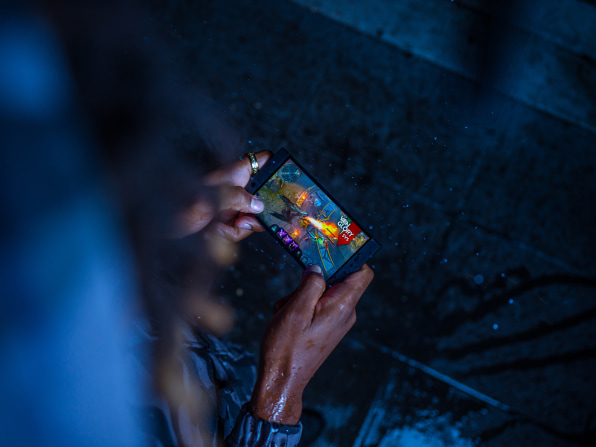
The Razer Phone 2, which begins shipping next week for $799, is a refreshing change of pace. Instead of trying to trim the bezels along the top and bottom of the display, Razer has embraced them as a defining feature of its flagship gaming phone. Each bezel contains a powerful front-firing speaker, and when the phone is in landscape mode, the bezels become grips that help the position the player’s thumbs over the edges of the screen.
“Everyone’s going bezel-less. We are not,” says Min-Liang Tan, Razer’s cofounder and CEO. “We’ve got these badass bezels that give you the best experience.”
Reality distortion
That claim might seem hackneyed coming from other companies, but Tan has a way of pulling it off. Over the last 13 years, Razer has fashioned itself as a gaming brand with a sense of style, and Tan has always been its most convincing ambassador. His standard uniform–a black V-neck and jeans–match the company’s jet-black mouses, keyboards, and laptops, and most of those products include a message from Tan welcoming customers to the “cult of Razer.”
Incidentally, Tan has been compared at least a couple of times to Steve Jobs for his appearance and stage presence, and Razer–much like Apple–has its share of detractors who feel the company built its success on nothing but slick marketing. That hasn’t stopped Razer from building a fanbase, whose gushing remarks often show up as retweets on Tan’s Twitter feed. When I mention at the start of our interview that I’m based in Cincinnati, he notes that there is “a dude out of Ohio that has my face tattooed on himself.” (The fan received a free Razer Phone in exchange for his devotion.)
Smartphones are Razer’s latest attempt to branch out from PC gaming peripherals, which still made up nearly two-thirds of the company’s $274.2 million in revenue during the first half of 2018. (The company has published its revenues since going public on the Hong Kong Stock Exchange last year.) Razer also sells a line of stylish gaming laptops that now make up almost a quarter of Razer’s revenues. The remaining 12% is split between highly profitable services–mainly digital payments, game sales, and rewards programs in Southeast Asia–and the nascent phone business.
[Photo: courtesy of Razer]
Flagship phones are a tough business, with virtually all the industry’s profits going to Apple and Samsung, but Tan is as confident in Razer’s efforts as he is in the Razer Phone 2’s bezels. He boasts that Razer had no market research showing demand for a phone aimed at gamers, but the company became interested in the idea as hit PC games like PlayerUnknown’s Battlegrounds started making the jump to smartphones.“We don’t look at just pure data or market research, because if you look at market research, you’re not ever going to be able to innovate,” Tan says, noting that Razer took a similar approach to gaming peripherals and PCs before applying it to phones. “You’ll always be looking back at what price points shipped last quarter, and who’s growing at what pace from a historical perspective.”
[Photo: courtesy of Razer]
Rise of the gaming phone
Tan points out that several other companies (such as Asus and Huawei) have since followed Razer into the gaming phone business, validating the company’s instincts. And with the recent launch of Fortnite on Android, these phones may be arriving at just the right time. Still, it’s unclear how many people might be willing to buy one of these phones instead of something more mainstream, like an iPhone or a Samsung Galaxy.
Although Tan says the original Razer phone was a “huge critical and commercial success,” Razer’s latest earnings report indicates that the company sold no more than 24,000 phones in the first half of 2018, based on its $700 price tag and revenues of $16.5 million in the “Others” category that covers smartphones. Apple sells more iPhones in an hour.
As for critical acclaim, the original Razer Phone did earn positive reviews for its loud front-facing speakers, huge battery, and 120 Hz variable refresh display (an industry first that improves touch-screen response times). But reviewers also panned the phone’s camera, which was slow to launch and struggled with low-light scenarios. They also wished for more features like wireless charging and waterproofing.
[Photo: courtesy of Razer]
Tan says the Razer Phone 2 will address all those complaints. The rear camera will have faster shutter speeds and a second lens with optical image stabilization to improve low-light performance, and both the front and rear cameras will allow smoother 60-fps video capture. The phone will also support wireless charging and has an IP67 rating for waterproofing and dustproofing. The display still measures 5.7 inches with 1440p resolution, but Tan says it’s 50% brighter than the original Razer Phone. The phone will also use Qualcomm’s latest Snapdragon 845 processor. And in a classic Razer flourish, the phone’s rear logo can now light up and change colors for different kinds of notifications.
Tan is also hoping to ship a lot more phones this time around, in part because the Razer Phone 2 will be more readily available. The original phone was only available in North America and Europe at launch, was often out of stock, and was not officially compatible with Verizon or Sprint. The Razer Phone 2 will work with all four U.S. carriers, and Tan hints at potential deals with carriers to sell the phone directly. The phone will also be available in Asia, where Razer gets about a third of its revenues.
“We’re excited, we think there’s going to be a lot of growth year-on-year between the previous phone and this phone,” Tan says.
[Photo: courtesy of Razer]
Building an ecosystem
Razer is announcing more than just a new phone. The company will also launch a new version of its Razer Blade 15 laptop that’s thicker than the previous version, but packs an Ethernet port and dual storage drives–one speedy solid state drive, and one hard drive that can fit more games. More importantly, the new Blade starts at $1,599, which is $300 cheaper than the previous version.
A couple new accessories are on the way as well, including a $100 set of USB-C earbuds with active noise cancellation and a $150 mobile game controller with a built-in cradle for the Razer Phone 2 or other Android phones.
This isn’t exactly an ecosystem like the one you’d buy into with an iPhone. If you buy Razer’s Android phone and Razer’s Windows laptop, you’re still getting two platforms run by separate companies.
[Photo: courtesy of Razer]
Still, Tan insists that Razer is building its own kind of ecosystem. Those pricey USB-C earbuds work just as well on the Razer Blade as they do on the Razer Phone, after all, and the light-up logo on the back of the Razer Phone 2 offers the same effects patterns as other products that support Razer’s proprietary “Chroma” lighting software. The customization options on Razer’s mobile controller are also similar to those of Razer’s console controllers, and Tan says that in the future, Razer could offer software that synchronizes some of these features across platforms.
“You get this great seamless experience without being locked into a specific software ecosystem,” he says.
And of course, you also get a bunch of gaming devices that all share the same aesthetic: Mostly black, with a splashy green serpentine logo and perhaps a touch of customizable RGB lighting. For a company that built a reputation around style at any price, perhaps that’s its own form of lock-in. Welcome to the cult.










You must be logged in to post a comment.